- The Yarrow Letter
- Posts
- Living The Good Life - First Steps
Living The Good Life - First Steps
Establishing a framework to measure your growth is key.

Yarrow Achillea
September 30, 2023
The Yarrow Letter
September 30, 2023
At least 280 million people worldwide experience depression.
If you've ever felt depressed you know how it can feel hopeless. You can feel meaningless, lost, confused, and jaded.
While depressed, we act based on our negative emotions, we make negative choices and suffer in a downward spiral.
A depressed person might feel bad, decide to smoke weed, feel bad afterward, and smoke some more -trying to escape the bad feelings.
Even with mild depression, you could have short-term fun and happiness, but when you look back at the years it all seems flat and meaningless.
You feel regret for not living.
How is one supposed to live without regrets?
How do we live something other than a dull and flat experience?
Two keys are vital to living without regrets.
That is what I'll be discussing today.
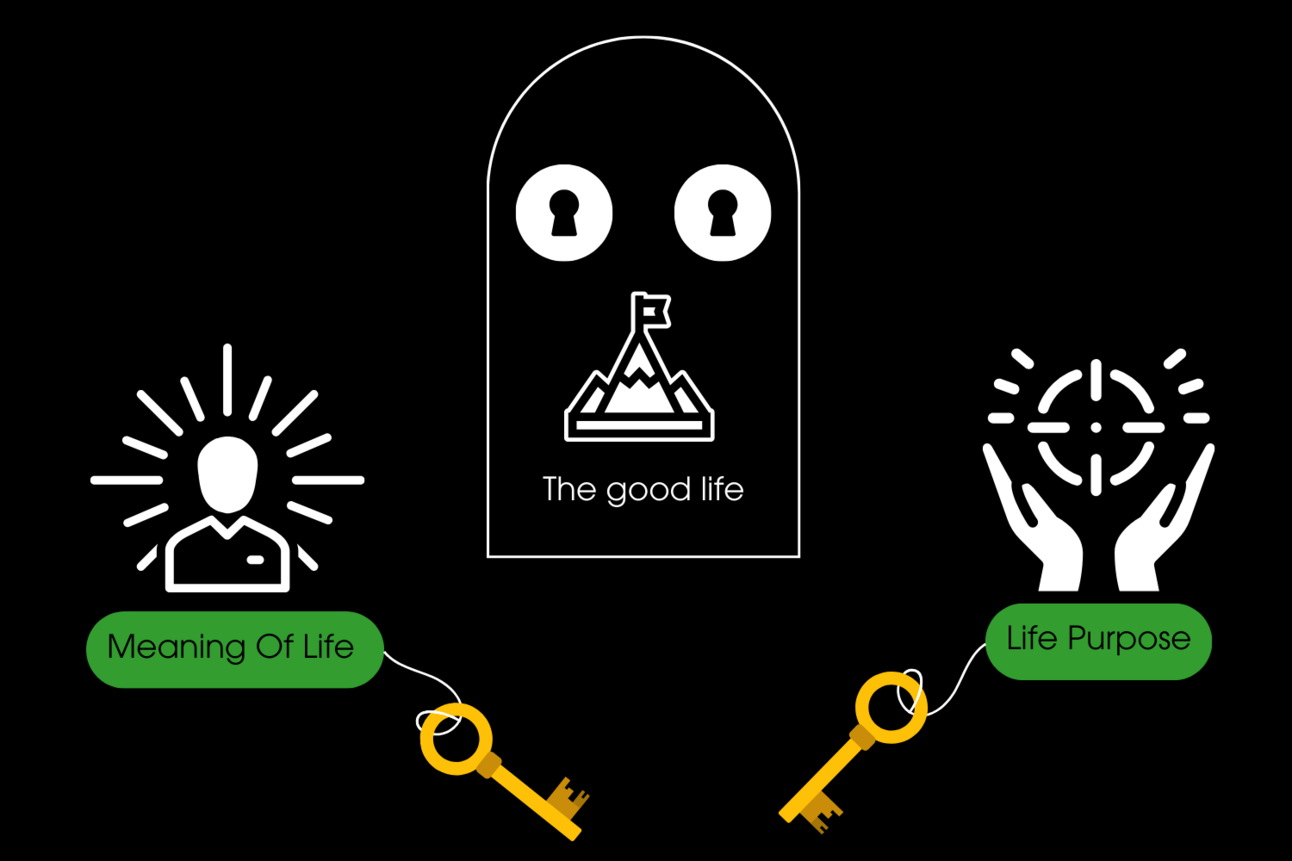
1. The Meaning Of Life
The meaning of life is to develop your consciousness.
To develop the accuracy of your perceptions.
Our mind is capable of perceiving our physical environment and abstract thought.
Basic awareness of our surroundings is a fundamental tool for survival.
The evolution of consciousness is what gave humans the power to rule the Earth.
Access to abstract thought, like assigning meaning to symbols - led to the creation of language.
~Our mind is the one and only tool we use to interact with reality.
Descartes was a philosopher with a scientific approach to perception. He was on a mission to prove anything without a doubt.
This led him to doubt everything about reality.
One of his greatest doubts is known as the evil demon doubt. It proposes that an evil demon - or perhaps a computer simulation, is feeding us "reality".
Descartes decided that even if this were the case, it left one thing true:
"I think therefore I am"
Our mind and our experience are the one undeniable truth.
Using and building trust in your mind is crucial to self-esteem and living well.
Knowledge is something we know, a detail, opinion, fact, or experience.
Wisdom is having the experience to use knowledge to make good decisions.
Consciousness is the full awareness of the quality of your knowledge and your judgments.
Acting with high-quality consciousness vs. low-quality consciousness:
Courage VS Fear
Love VS Hate
Dogma and rigid beliefs vs. open-mindedness
Love for all versus love only for your tribe
Experience VS Belief
Growth VS Tradition
A high-quality consciousness:
Is selfless and giving
Prioritizes truth rather than being "right"
Takes 100% responsibility
Is spontaneous and flexible
Is organic and creative
Prioritizes long-term gains
Is aware of the result of their actions
Knows that they are not the "most conscious", they don't hold themselves as better than others
~A highly conscious person acts with purpose, integrity, responsibility, and awareness.
They think critically rather than overthinking.
They live in the moment with respect for the future.
They respect how small they are in the universe while knowing their right to existence.
A conscious person is concerned with the validity of their judgments and perceptions. They seek to understand all that influences their actions, reactions, judgments, and values.
Living consciously requires effort and assertiveness. The antithesis to consciousness is laziness, ignorance, arrogance, jealousy, blame, and close-mindedness.
A low-quality consciousness, or an unconscious individual:
Blames others
Takes pride in their low consciousness, or their close-mindedness. They might say "I'm so devoted to my belief system"
Fights reality
Clings to ideas and pet theories
Disowns and suppresses their emotions
~ Acting with little consciousness results in disappointing and sometimes confusing outcomes.
In a state of low consciousness, one might find that their life is drowning in a fog of disappointment.
Their behavior is unproductive and unfulfilling.
When they breathe fresh air - seeing for a moment that they have been acting without awareness - the fog quickly catches back up with them.
Low consciousness is the harder way to live, but it is tremendously seductive.
Acknowledging our shortcomings requires peace with inadequacy and a commitment to grow.
Acknowledging our strengths comes with a responsibility to exercise them.
Severe unconscious behavior leads to a victim mindset. The victim blames the world for their problems and believes they have no control in life.
To live unconsciously is to betray your mind, to betray this basic tool is to build distrust in yourself.
This relationship is reciprocal.
To evaluate your consciousness ask yourself:
-What is the quality of my emotional reactions?
When something bad happens it is your thoughts that define your emotions, your emotions can lead to actions. Consider how a negative emotion might make you act.
If you find it difficult to see a silver lining after a bad event consider this perspective:
"It’s unfortunate that this has happened. No. It’s fortunate that this has happened and I’ve remained unharmed by it—not shattered by the present or frightened of the future." - Marcus Aurelius
It should be reassuring that despite your circumstances your consciousness remains your own.
Some stub their toe and have an intense emotional reaction and some feel the pain, get back up, and keep going.
If you are easily annoyed, saddened, angered, or jealous, you may be operating with low-quality emotions.
To choose the positive thoughts is the effort we can make to increase the quality of our thoughts.
~ Check in with your emotions hourly, even every 15 minutes.
How do your emotions fluctuate throughout the day?
What is your average happiness?
-What is the quality of my intentions?
Are you motivated by negative intentions or positive ones?
When completing an assignment do you motivate yourself with: "I have to finish this or I'll fail the class" or "I will produce some quality work to cement my learning."
Living with negative intentions will make life feel like a battle.
Think positively and life will be filled with joy.
Do not confuse the result with good intent.
If you were to pay for goods at a Mom & Pop shop that does not excuse your negative intent: I'll pay for this because stealing it could get me in trouble.
If this is how you feel then parting with your money will feel all the more painful. If you choose to intentfully support this business, you will be at ease or even happy with the loss of cash.
Rather than framing it as "losing money" you could choose to see it as supporting another’s livelihood.
~Check in with your intentions hourly or every 15 minutes.
How many intentions are misaligned throughout your day?
How do your intentions predict how your action makes you feel?
Living consciously is not easy at first. So how can we begin to put it into practice?
Living consciously requires we be aware of every facet of our life.
It is best to start with your values, goals, and behaviors.
-You don't need to change your values, but you must be aware of their origin.
Did you grow up with them?
Did you uncritically accept your values?
Do these values align with your goals?
If your values don't align with your behavior you will experience guilt. Again this builds distrust in your mind.
-Your goals must be well-defined, vague goals lead to vague results.
What are your goals?
Are they grounded in discipline?
Did you make these goals with good intentions?
If your goals aren't truly inspiring then it will be hard to apply yourself. Know the value of your goals, and know the consequences of not striving for them.
-You must be aware of your behavior.
What results did this behavior or action create?
How do I feel after doing that?
Is my behavior/action guided by clarity or vagueness?
To embark on this journey to develop your consciousness there will be many obstacles.
They are some of the hardest trials to face, but we must start small.
Give yourself time to grow in these areas.
We must:
Open our hearts to the world, loving all, even when hate runs rampant.
Develop our ability to find happiness, regardless of the situation.
Practice controlling ourselves, even in the face of impulse
Face our fears, small and big
Eliminate malignant selfishness
Practice open-mindedness, you don't need to accept or believe every perspective, but don't dismiss it or become triggered by it
Put in the work to be conscious, don't wait for an enlightening moment, no shroom trip or guru is going to hand you a more focused consciousness
Be lifelong learners, we must study history, physics, politics, psychology, biology, health, society, economics, spirituality, philosophy, love, relationships, and so much more
I recently learned of this powerful approach to ending bad habits.
High awareness action.
Miyamoto Mushashi, the famous samurai and author of The Book Of Five Rings said that there is a balance between trying too hard and not trying hard enough.
To act without the right effort makes matters worse.
In the past, I thought that I had to practice extreme will, determination, and force to stop myself from doing bad habits/behaviors.
But this way can be painful, especially if the behavior is something we want to do. We feel like playing video games, gossiping, or binge-watching a show, so trying to stop these enjoyable things brings pain.
Instead of making this process painful, try applying awareness to the activity. Feel every moment of it. If you are gaming for hours on end - be aware during every level or match.
I'm not here to argue whether or not gaming is healthy, but consider what you could be spending your time on:
Meaningful recovery, like meditation or stretching
Learning something new
Spending time with friends or family
Working on your project
Knowing why you shouldn't do something is helpful, but how often do you think of those reasons when you're doing the activity?
Bring high awareness to your activity by feeling every moment slip by that could be spent on a healthier version of you.
Really feel how the screen wears on your eyes as your play session draws on. Note how you feel during every triumph and setback of the game.
If you bring full awareness every time you engage, you will eventually let it go with ease. What makes it easier is the relationship you cultivate with the activity.
With full awareness, it becomes clear that you should change.
The meaning of life is to improve the accuracy of perception and expand consciousness.
2. Your Life Purpose.
Your personal life purpose is what you pursue for your career. After all, we gotta eat.
Life purpose is the physical or otherwise tangible ways we strive to impact the world.
In my experience life purpose is the defining factor in whether or not my actions have any value.
If my success actually feels like worthwhile progress.
In 2022 I was accepted into a very competitive university major as a direct admit, at a fairly selective school to begin with.
Ah fresh bragging, right off the vine.
Jokes aside - I say this to paint a picture.
At this time I had no life purpose, this success felt like nothing to me.
Not worth feeling happy about. Not indicative of forward momentum.
It's like golfing with no holes on the course.
Or baking just to throw the cake away.
But with life purpose - everything I do feels like a meaningful action towards or against my goal: helping others.
It is of a high consciousness to strive to work with what you love or to make an impact you care about.
To commit yourself to a purpose puts things in perspective. Suddenly you might find it logical to:
Drop bad habits/addictions
Accept responsibility
Get out of low-quality relationships
Build healthy habits and routines
Life purpose will light a fire under you that makes these things seem like gracefully obvious changes to make.
Life purpose can be ever-changing.
I like to make analogies so here is one of my favorites as of late:
If your consciousness, mindset, purpose, personal power level, sense of self, or anything else of a similar nature - were a Pokemon - then you'd start at stage one.
Starting as a Charmander, you learn new moves (gaining knowledge), and EXP, you level up (wisdom).
When you finally operate the best you can as a Charmander - effectively using your mindset and perspective to engage with life - a dose of consciousness (life purpose, radical mindset shift, etc.) will catalyze your evolution.
As a Charmeleon you know that the work isn't done. There are new moves to be learned, and new potential to be explored. Raising your conscious engagement with your life is never done. It is a constant orientation to life.
As your Charmeleon level of consciousness is given time to spread through every area of your life, you may seek out a final push to transcend.
This could look like:
Mastering meditation
Mastering self-governance
Expanding your awareness to an immense range of topics
Mastering self-esteem
Experiencing a spiritual awakening - like ego death
As the fully-actualized Charizard you might imagine the work is done, but as a Charizard - that's when shit really gets done.
You'd have wings after all, what would you be doing if you weren't using them?
We must be aware of the potential Blastoise in our life, a reckoning hiding around the corner, ready to douse our flame.
If we are to be knocked down, we must be willing to reorientate ourselves to life.
Sometimes it's best to start anew ~ maybe this time as a Bulbasaur.
If choosing your Pokemon is akin to choosing a life purpose, then evolving to stage 2 is like properly working at it, with stage 3 being a state where you are actively achieving it.
Life purpose is not a life contract - we are free to readjust when necessary. Maybe your life purpose never gets past Charmander stage, and that's okay.
Consider what that purpose means to you, double down your efforts, or start exploring again.
If you don't have a life purpose, let me suggest that your purpose should be finding a purpose.
This practice involves a few minutes of consciousness-related sentence stem completion in the morning and evening of your weekdays.
With a conscious orientation to expand your awareness and perspective, paired with a commitment toward life purpose - you will without a doubt look back on your life and know you lived it right.
This is the fulfilling path.
Time for another song.
From one of Greg Spero’s Tiny Room Sessions: Organized Crime
This one is a wonderful jazzy experience.
The synths, drums, and piano all come together in a way that reminds of of crunching through a Butterfinger. It also feels like a pretty sunset.
But more importantly, it is a great song for practicing awareness.
I like to sit through this song attentively - picking out each instrument and giving them the attention they deserve.
I hope you enjoy.

Thank you for reading. Share with a friend if you found value here.
Always do your best, what you plant now, you will harvest later.
-Yarrow Achillea
